
Where to Put Artificial Flowers at Home: A Room-by-Room Guide
The best place for artificial flowers is where they add colour, shape and softness without making the room feel crowded.
A hallway may need a tall, quiet arrangement. A bedroom often works better with something smaller and softer. In a bathroom, a simple botanical stem can be enough.
The key is not simply finding an empty surface.
It is choosing a placement that works with the room, the light, the furniture and the way the space is used.
Here is where artificial flowers tend to work best around the home.
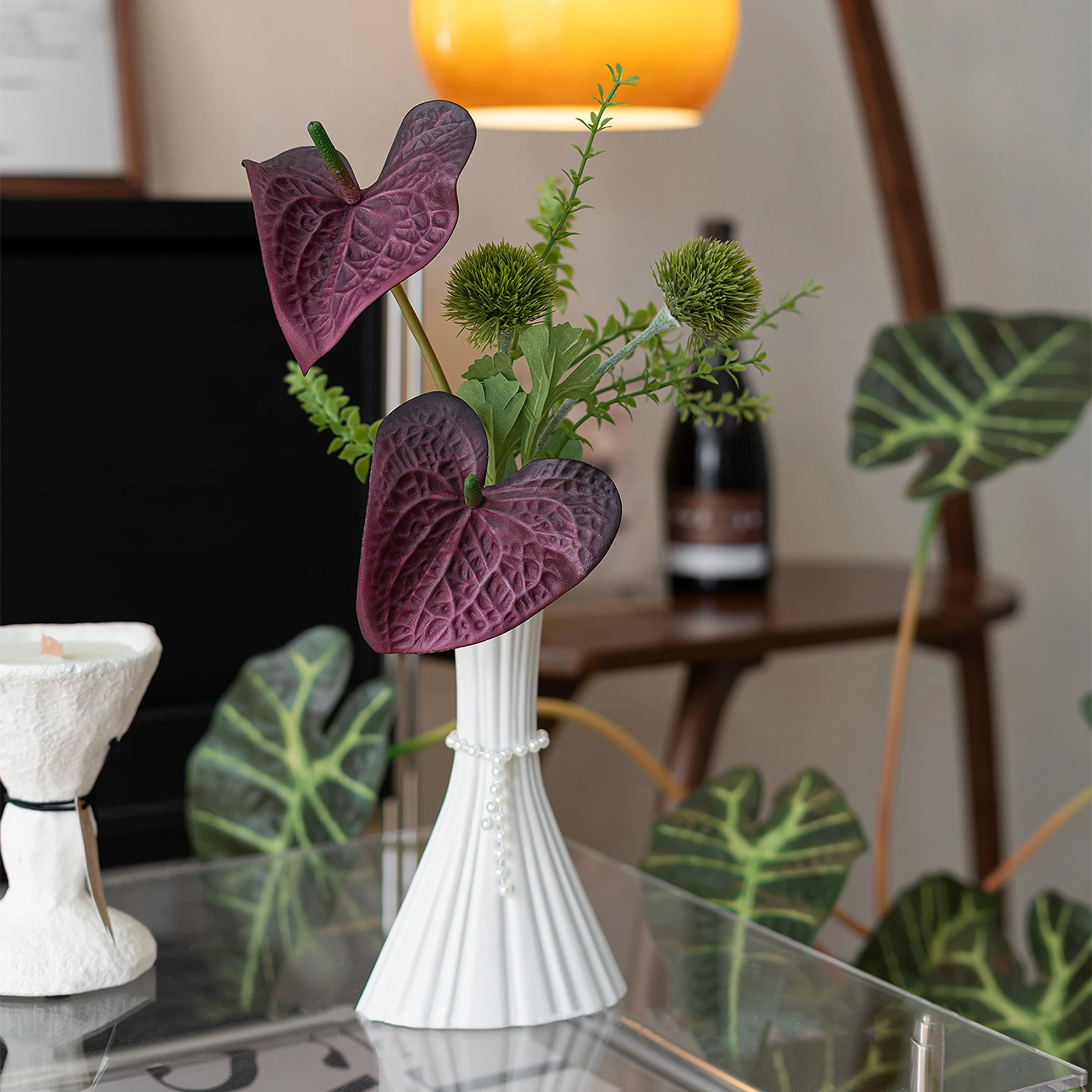
1. Living Room
The living room usually gives you the most freedom.
A larger arrangement can sit on a console, side table or coffee table, while a smaller stem can soften a shelf or cabinet.
For a larger room, look for arrangements with enough height to hold their own against the surrounding furniture.
For smaller rooms, a compact bouquet is often more effective than a large display.
Good placements include:
- Console tables
- Sideboards
- Coffee tables
- Open shelving
- Side tables
- Fireplace surrounds
One useful rule is to avoid placing every arrangement at the same height.
A tall stem beside a lower arrangement creates more visual movement and makes the room feel less staged.
Explore our [Living Room] collection for arrangements designed around larger and smaller spaces.
2. Bedroom
Bedrooms benefit from quieter arrangements.
The goal is usually not to create a focal point as strong as the living room, but to add a little softness and colour.
A small bouquet can work well on a bedside table, dressing table or chest of drawers.
For a calmer look, choose:
- Soft whites
- Muted greens
- Pale pinks
- Warm neutrals
- Light botanical tones
Positioning matters too.
Flowers beside a lamp, mirror or stack of books can become part of the composition rather than looking like a separate decorative object.
A simple arrangement is often enough.
Shop [Bedroom] styling ideas for smaller artificial flower arrangements and botanical details.
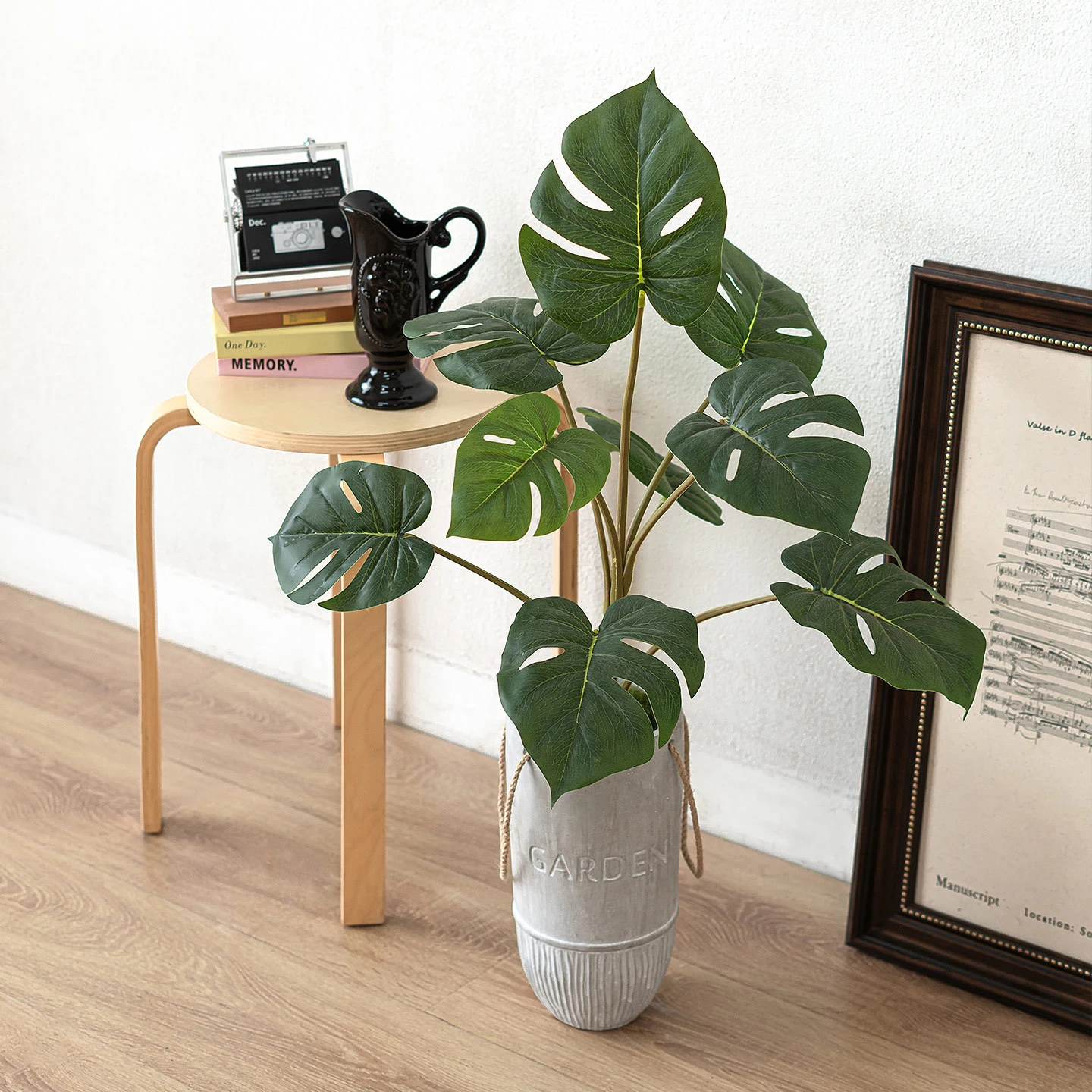
3. Hallway
Hallways are often overlooked, but they are one of the best places for artificial flowers.
Unlike fresh flowers, artificial arrangements do not need regular watering or much day-to-day attention, which makes them practical in transitional spaces.
A tall arrangement can work particularly well beside:
- An entrance console
- A narrow sideboard
- A hallway table
- A large mirror
- The end of a corridor
Think vertically.
A hallway can often handle more height than you might expect because the arrangement is viewed at a distance.
Long stems, grasses and structured foliage can help draw the eye upward without taking up much floor or surface space.
For narrow hallways, avoid very wide arrangements.
A slimmer silhouette usually feels more intentional.
4. Bathroom
Bathrooms are a good example of why artificial flowers do not have to look traditional.
A simple botanical stem or a small arrangement can bring texture into a space that is often dominated by hard surfaces.
Try placing flowers:
- Beside a basin
- On a vanity
- Near a bathtub
- On a bathroom shelf
- Beside folded towels
Green foliage often works particularly well here because it adds contrast against tile, stone and ceramics.
You also do not need a large arrangement.
In a bathroom, one carefully chosen stem can have more impact than a full bouquet.
Browse our [Bathroom] collection for compact botanical styling ideas.
5. Kitchen
The kitchen is another place where smaller arrangements usually work best.
A large bouquet can interfere with food preparation or take up valuable workspace, so think about areas that are decorative rather than functional.
Good locations include:
- Kitchen islands
- Open shelves
- Breakfast tables
- Dining corners
- Countertops away from cooking areas
A small arrangement beside ceramics, cookbooks or a fruit bowl can make a kitchen feel warmer without making it feel overly decorated.
For modern kitchens, simple stems and restrained colours often work better than dense bouquets.
For more traditional kitchens, softer floral shapes can help balance wood, stone and painted cabinetry.
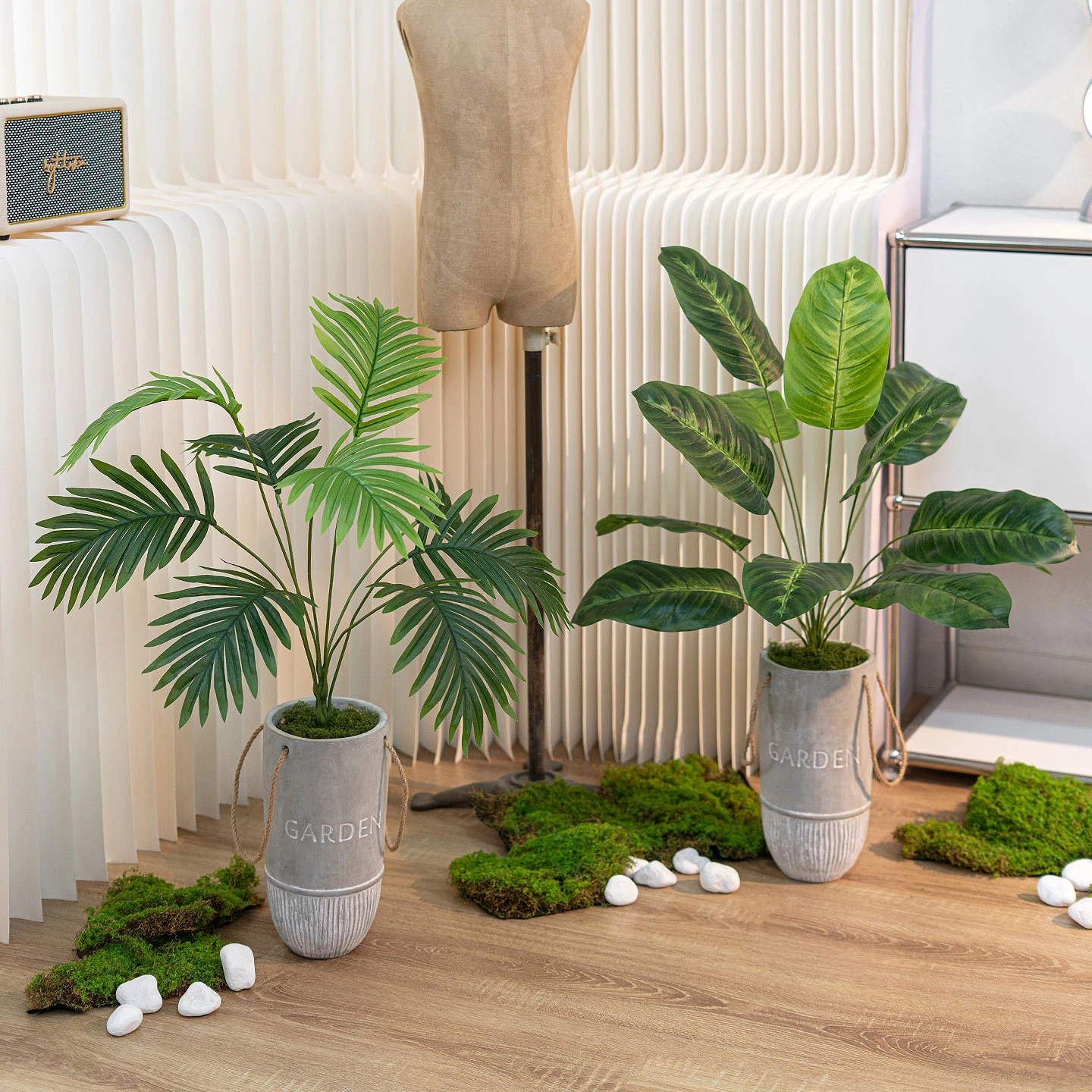
6. Home Office
Artificial flowers can work especially well in a home office because they add visual interest without requiring regular maintenance.
A small arrangement on a desk can break up a large expanse of technology and hard surfaces.
You can also use:
- A shelf behind the desk
- A filing cabinet
- A side table
- A bookcase
- A windowside console
For workspaces, avoid arrangements that are so large they compete with the screen or make the desk feel crowded.
A small botanical accent is often enough.
The best office arrangements tend to add colour without demanding attention.
7. Dining Area
Dining tables are one of the most obvious places for flowers, but scale matters.
A centrepiece should complement the table rather than block the people sitting around it.
For everyday dining, try a lower arrangement or a group of shorter stems.
For larger tables, you can create more visual interest with multiple smaller arrangements rather than one oversized bouquet.
Consider the shape of the table:
Long table
Use an elongated arrangement or several smaller pieces.
Round table
A compact central arrangement often works best.
Small dining table
Keep the arrangement low and simple.
A good dining arrangement should still allow conversation across the table.
8. Entryway
The entryway sets the tone for the rest of the home.
This is a good place to use an arrangement with a little more personality.
A sculptural branch, tall stem or layered bouquet can work particularly well beside an entry console or mirror.
You can also use the entryway to introduce a colour that appears elsewhere in the home.
For example, warm terracotta tones can be repeated through flowers, ceramics and soft furnishings.
That repetition makes the arrangement feel connected to the room rather than randomly placed.
How to Choose the Right Size
Where you place artificial flowers matters, but so does proportion.
An arrangement that is too small can disappear.
One that is too large can overwhelm the furniture around it.
A useful starting point is to look at the height and width of the surface beneath it.
Small surface
Choose a compact arrangement with a controlled silhouette.
Medium console or sideboard
A medium-height arrangement can create a clear focal point.
Large console or entry table
A taller arrangement can balance the scale of the furniture.
Don’t focus only on flower height.
The overall width, foliage density and shape also affect how an arrangement feels in a room.
Should Artificial Flowers Be Near a Window?
They can be.
But the amount of direct sunlight matters.
Artificial flowers are often chosen for their longevity, so prolonged strong direct sunlight can gradually affect the appearance of some materials.
For a bright room, consider placing arrangements:
- Beside the window rather than directly in it
- On a console opposite the window
- In a shaded corner
- Away from concentrated afternoon sunlight
The placement should also work visually.
A flower arrangement does not need to sit in the brightest part of a room to be noticed.
Sometimes a slightly quieter position creates a more natural result.
How Many Artificial Flower Arrangements Should a Room Have?
More is not always better.
One carefully chosen arrangement can be enough.
In a larger open-plan room, two or three smaller arrangements may work better than a single oversized bouquet because they distribute colour around the space.
Try to create relationships between them.
For example:
Living room:
One main arrangement on a console, with a smaller botanical accent on a side table.
Bedroom:
One small arrangement near the bed or dressing table.
Hallway:
One taller arrangement at the main console.
The goal is to create rhythm rather than fill every empty surface.
What About Small Spaces?
Artificial flowers can actually be useful in smaller homes because they allow you to introduce botanical detail without committing a lot of space to large plants or regularly replaced bouquets.
For smaller rooms, look for:
- Narrow arrangements
- Single stems
- Small posies
- Compact foliage
- Vertical shapes
A tall, narrow arrangement can sometimes have more impact than a wide bouquet because it uses vertical space without taking over the furniture.
The Best Placement Is Usually the One That Feels Natural
Artificial flowers work best when they look as though they belong to the room.
That usually means thinking about:
Scale — Does the arrangement suit the furniture?
Colour — Does it work with the room’s existing palette?
Shape — Does the silhouette add something to the space?
Position — Does it support the composition rather than interrupt it?
Maintenance — Is the location practical for how the room is actually used?
A flower arrangement should not feel like something that was simply added to an empty surface.
It should feel like part of the room.
A Simple Room-by-Room Checklist
| Room | Good Placement | Best Approach |
| Living Room | Console, sideboard, coffee table | Medium to large arrangements |
| Bedroom | Bedside, dressing table | Small, softer arrangements |
| Hallway | Console, sideboard | Tall, narrow shapes |
| Bathroom | Vanity, shelf | Simple stems and foliage |
| Kitchen | Island, shelf, dining corner | Compact arrangements |
| Home Office | Desk, shelf, side table | Small botanical accents |
| Dining Area | Table centre | Low arrangements |
| Entryway | Console, mirror | Sculptural or taller arrangements |
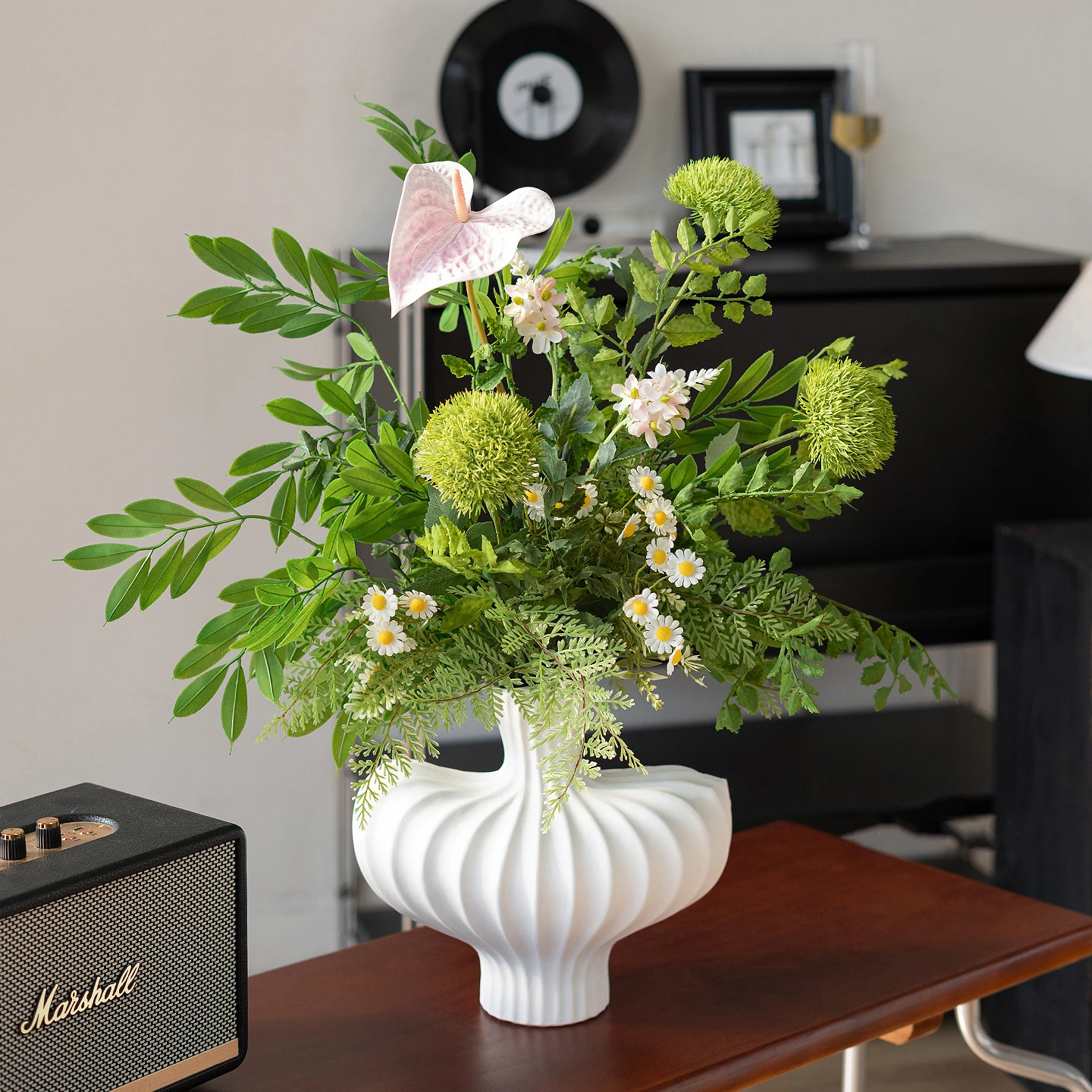
Final Thought
There is no single “correct” place for artificial flowers.
The right placement depends on what the room needs.
A living room may need height.
A bedroom may need softness.
A hallway may need structure.
A bathroom may only need one green stem.
The most successful arrangements are usually the ones that add something to the room without taking over.
That is what makes artificial flowers useful as part of everyday interior styling: they can stay where they work, season after season.
Bring lasting botanical detail into your space. Discover realistic artificial flowers and arrangements at LifelikeBloom — designed with natural texture, movement and proportion for real homes.[Explore LifelikeBloom →][Shop All →][By Room →][Shop Artificial Anthurium Bunch →][Shop Artificial Potted Plant, Cement Pot →][Shop Artificial Greenery Bunch →]