
How to Make Artificial Flowers Look Real: 9 Key Details
The best artificial flowers are not convincing because they look perfect. They look convincing because they behave visually like real plants.
A realistic artificial flower should have variation in colour, texture, shape and direction. The petals should not look flat, the leaves should not all face the same way, and the stems should have enough movement to create a natural silhouette.
If you are choosing faux flowers for your home, these are the nine details worth looking at before you buy.
1. Look Closely at the Petal Texture
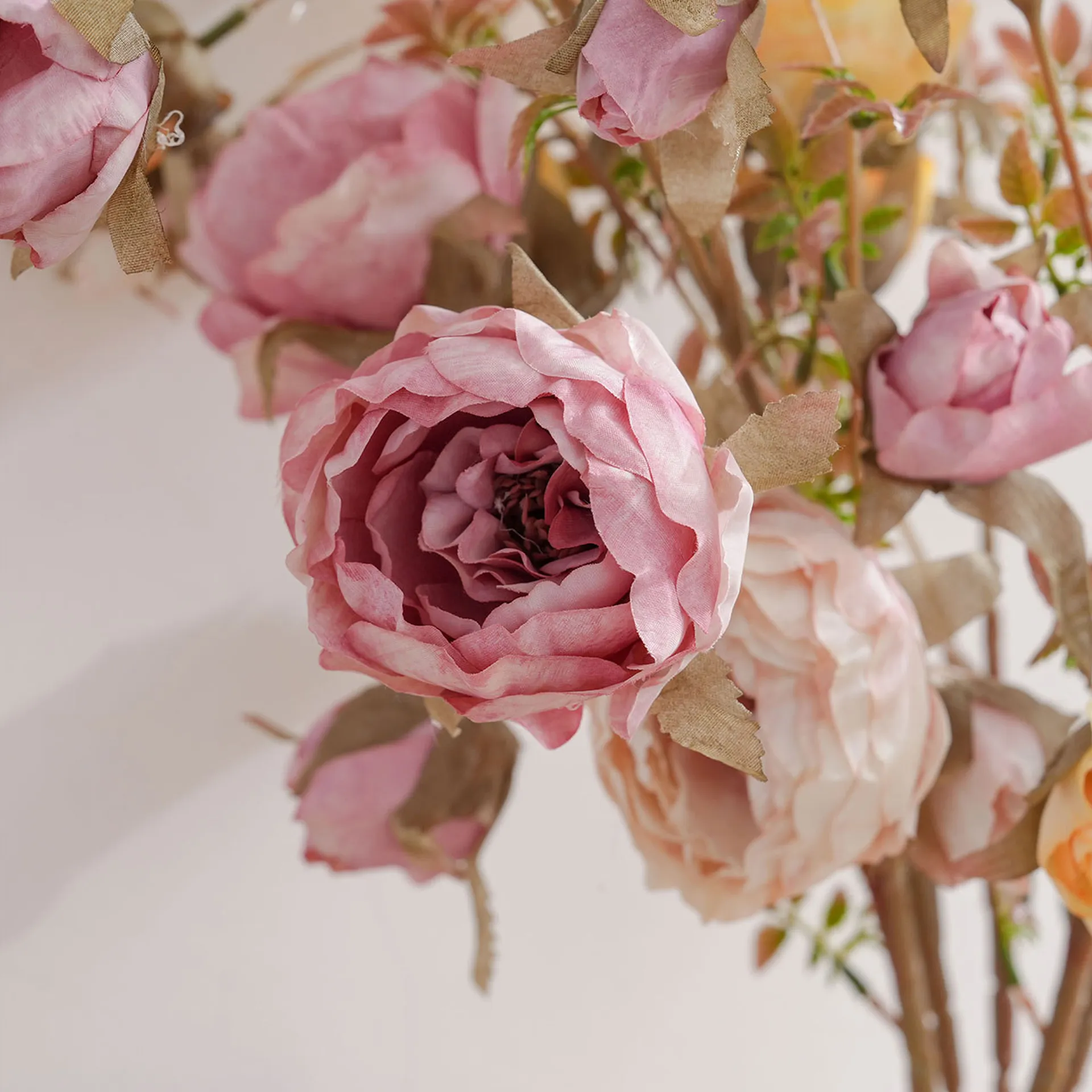
The first thing to examine is the surface of the petals.
Real petals rarely look completely smooth and uniform. They have subtle ridges, folds, veins, translucency and changes in surface texture.
Artificial flowers can look obviously synthetic when the petals are:
- Completely flat
- Too glossy
- Identical in shape
- Too thick-looking
- Perfectly symmetrical
A more realistic artificial flower uses texture to create small variations that become visible when you look closely.
This is one reason close-up photography matters. A flower that looks convincing from across the room may look completely different when viewed at arm’s length.
2. Look for Natural Colour Variation
Real flowers are rarely one perfectly consistent colour.
A white flower may have slightly warmer tones towards the centre. A pink petal can become deeper towards the base. Green leaves can vary from one leaf to another.
This variation is subtle, but it makes a significant difference.
When choosing realistic faux flowers, look for:
- Slight changes in tone
- Natural-looking gradients
- Different shades within the same arrangement
- Less uniform colour across every petal
The goal is not to make every flower different.
It is to make the arrangement feel less manufactured.
3. Check the Flower Centre
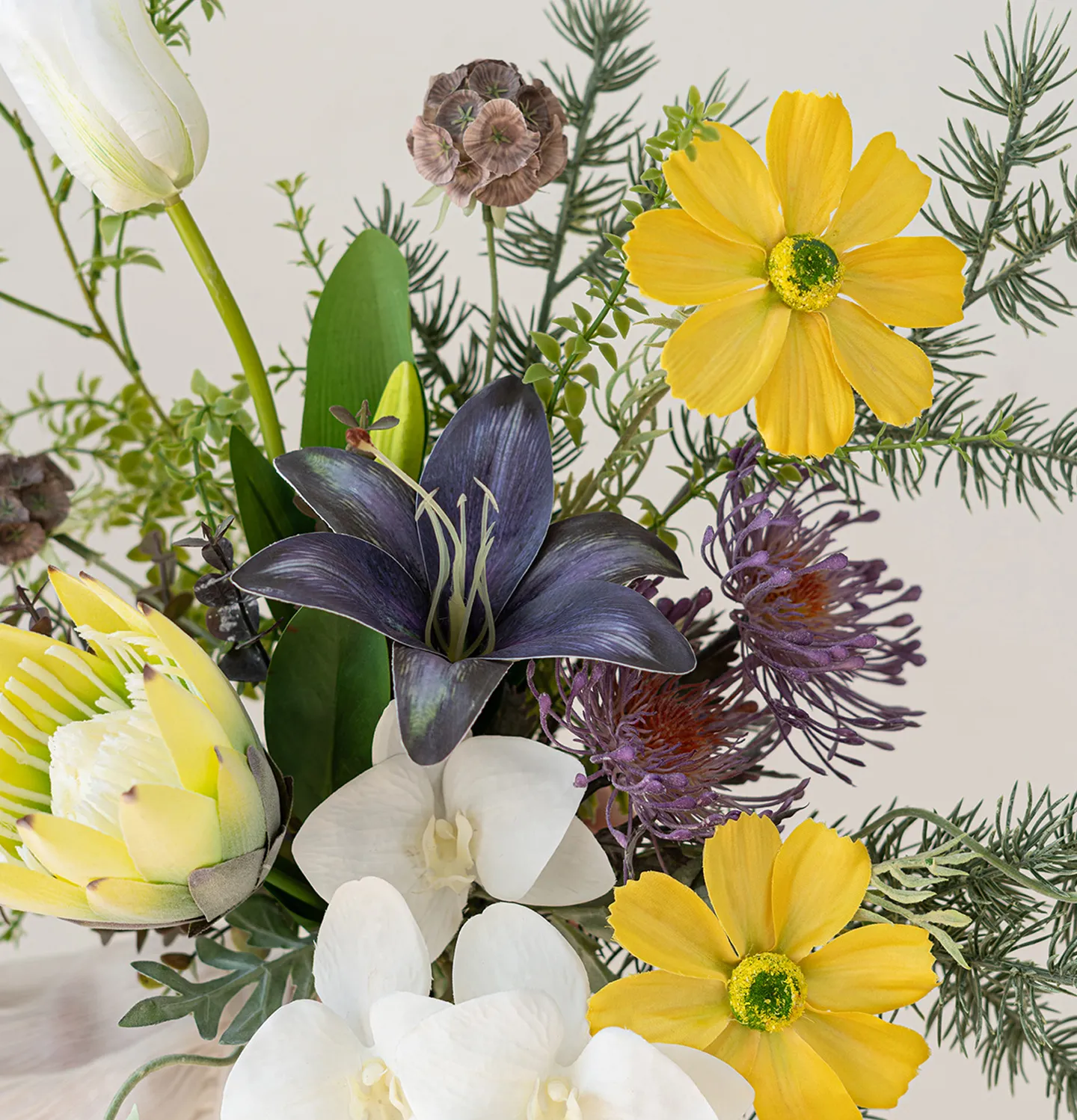
The centre of a flower is often where artificial flowers give themselves away.
Look closely at:
- Stamens
- Petal layers
- Central structures
- Colour transitions
- The way the petals meet
A convincing flower centre should have depth rather than looking like several pieces simply attached together.
This becomes particularly important with flowers that are naturally complex, such as orchids, lilies and roses.
4. Look at the Leaves, Not Just the Flowers
When people judge whether an arrangement looks real, they often focus on the flowers.
But leaves can be just as important.
Real leaves have:
- Visible veins
- Slight differences in colour
- Different angles
- Natural curves
- Small irregularities
If every leaf is perfectly flat and points in exactly the same direction, the whole arrangement can feel artificial even when the flowers themselves are convincing.
Good artificial foliage should help create the impression that the arrangement has grown rather than been assembled.
5. Natural Stems Make a Difference
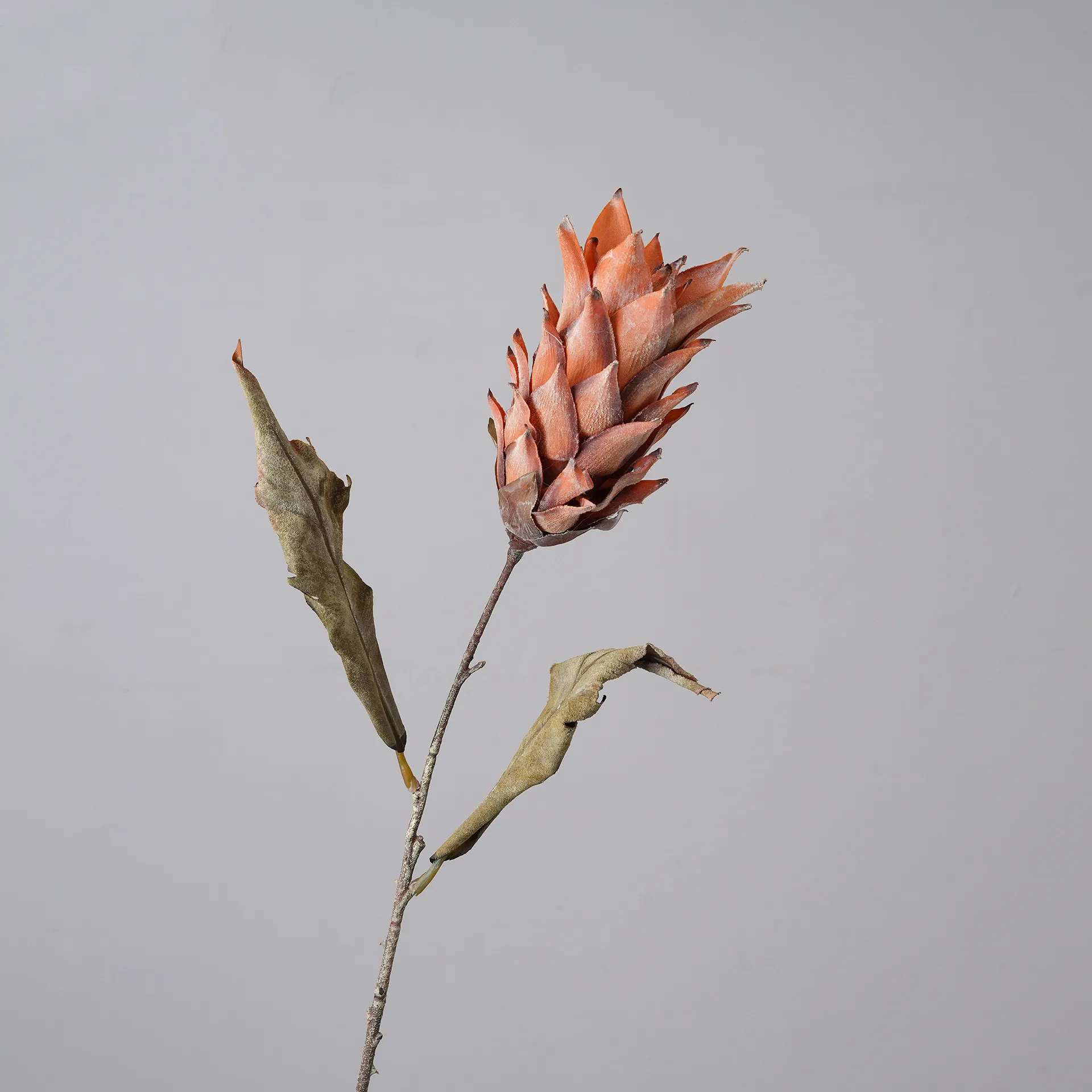
A realistic flower should not look like it has been attached to a rigid plastic stick.
Look at the stem’s:
- Thickness
- Colour
- Flexibility
- Surface texture
- Connection to the flower
Natural stems have movement.
They curve, overlap and change direction.
That movement is especially important when arranging several stems in a vase. Slightly different heights and angles create a more natural silhouette than keeping everything at exactly the same level.
6. Avoid Perfect Symmetry
One of the easiest ways to make artificial flowers look fake is to arrange everything too perfectly.
Real flowers don’t grow according to a grid.
One bloom may sit slightly higher. Another may lean to one side. A leaf may sit behind a flower while another extends outward.
When arranging faux flowers, try to create:
height + width + depth
rather than a perfectly symmetrical shape.
You can gently bend stems and reposition leaves to create more movement.
The arrangement should feel balanced, but it doesn’t need to be identical on both sides.
7. Pay Attention to Proportion
Realism is also about scale.
A very large flower combined with tiny leaves and an unusually thin stem can look unnatural even when every individual component is well made.
Look at the relationship between:
- Flower size
- Leaf size
- Stem thickness
- Arrangement height
- Vase size
Good proportions make an arrangement feel believable.
This is particularly important for larger artificial plants and floor arrangements. The taller the arrangement, the more important the relationship between the foliage, stems and container becomes.
8. Choose a Vase That Supports the Arrangement
Even realistic artificial flowers can look artificial when placed in the wrong vase.
The vase should support the proportions of the arrangement rather than compete with it.
For example:
Tall arrangements
→ usually work better with a taller or visually stable vase.
Small bouquets
→ can feel lost in a large container.
Wide arrangements
→ need enough opening space for the stems to spread naturally.
The aim is to make the flowers and vase feel like one composition.
A good arrangement shouldn’t look as though the flowers were simply dropped into whatever container was available.
9. Give the Arrangement Some Space
The final detail is often overlooked:
don’t overcrowd it.
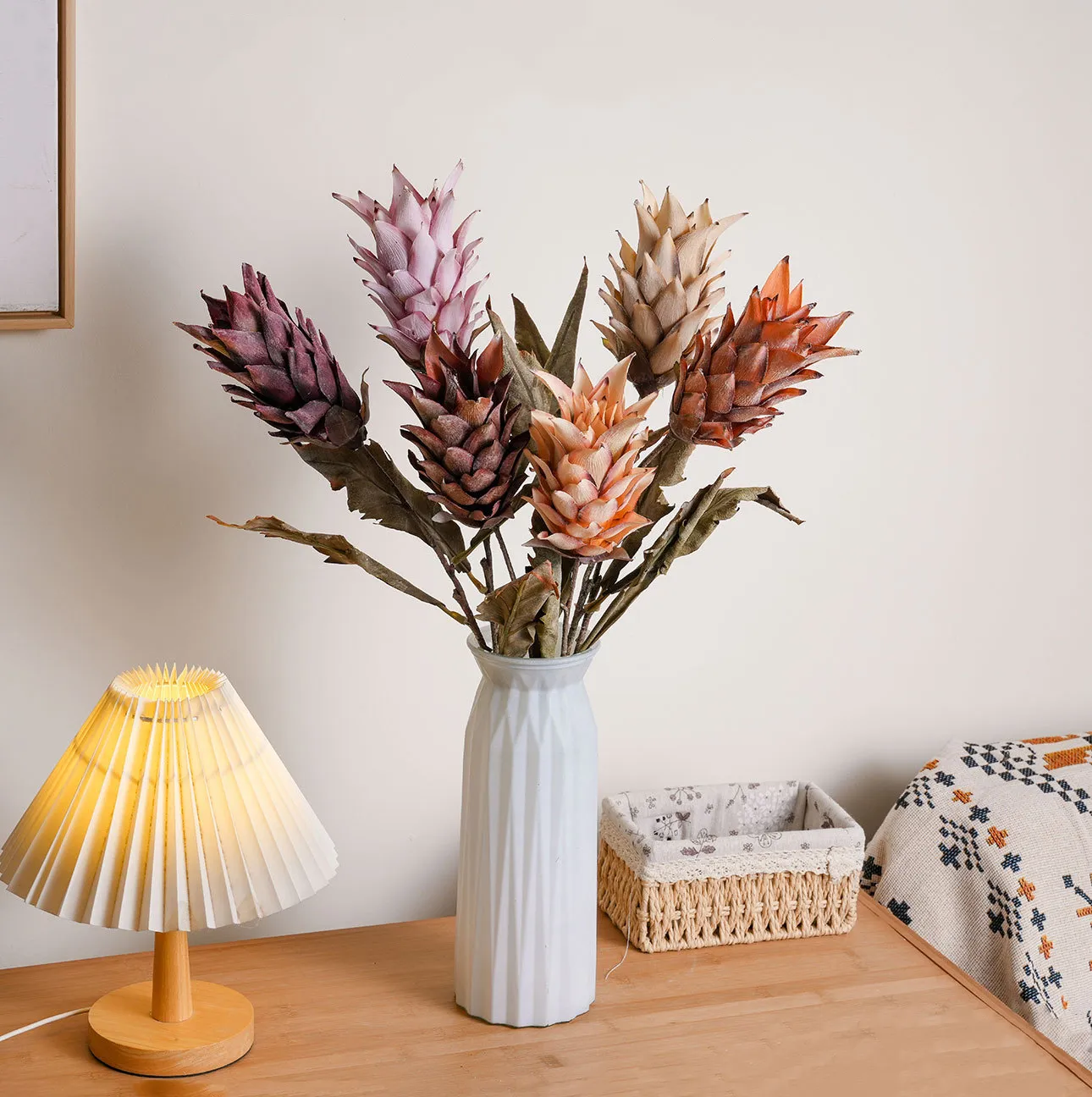
Real flowers have gaps between stems, petals and leaves.
Those small spaces create depth.
When an artificial arrangement is packed too tightly, every component becomes equally visible and the result can feel heavy and manufactured.
Instead, allow some stems to:
- Sit slightly behind others
- Extend outward
- Rise above the main flowers
- Fall naturally towards the sides
A little negative space can make a large difference.
What Makes Artificial Flowers Look Real?
If you only remember a few things, look for these:
| Detail | What to Look For |
| Petals | Texture, folds and subtle irregularity |
| Colour | Natural variation and gentle gradients |
| Flower centre | Depth and believable structure |
| Leaves | Veins, curves and varied angles |
| Stems | Natural thickness and movement |
| Shape | Slight asymmetry |
| Proportion | Balanced flower, foliage and vase sizes |
| Arrangement | Height, width and depth |
| Spacing | Natural gaps between elements |
The most realistic artificial flowers don’t need to imitate every detail perfectly
They need enough small, believable details that your eye stops looking for the difference.
How Do You Make Faux Flowers Look More Realistic at Home?
Even a well-made artificial arrangement can benefit from a little shaping.
When you first unpack your flowers, gently separate the stems and reposition the leaves. Bend some stems slightly rather than leaving everything in the exact shape it arrived in.
Then step back and look at the arrangement from several angles.
Ask:
Does everything point in the same direction?
Is the height too uniform?
Are there enough gaps between the flowers?
Does the vase suit the scale of the arrangement?
Small adjustments can make an arrangement feel much more natural.
The Difference Is Usually in the Details
You don’t need to touch an artificial flower to decide whether it looks convincing.
Look closely.
The petals should have texture. The colours should have variation. The leaves should have believable veins and movement. The stems should support the flowers naturally, and the overall arrangement should have enough irregularity to avoid looking manufactured.
That is what separates an artificial flower that simply fills a space from one that deserves a second look.
Bring realistic botanical detail into your space. Explore artificial garden roses, faux clematis and dried-look protea at LifelikeBloom — designed with natural texture, movement and proportion for real homes.[Explore LifelikeBloom →][Shop All →][Shop Artificial Garden Rose Spray →][Shop Artificial Clematis →][Shop Dried-Look Faux Protea →]