
Can Artificial Flowers Go Outside? What to Check First
By Peng Haitong · Published 24 October 2026
Artificial flowers can go outside, but only when the product is made for outdoor use or the display is temporary and well sheltered. Ordinary indoor artificial flowers may fade, retain moisture or become unstable when exposed to strong sunlight, rain and wind.
A covered porch is therefore quite different from an open garden table. Before moving an arrangement outdoors, check the product description, consider how exposed the position is and make sure the base cannot collect water or blow over.
For the arrangements currently sold by LifelikeBloom, our artificial flowers FAQ takes a deliberately cautious approach: a covered porch can work, but the flowers are not intended to sit in rain, standing water or prolonged direct sunlight.
Why outdoor placement changes an artificial arrangement
Artificial flowers do not wilt like cut flowers, but that does not make them unaffected by weather. Outdoor placement introduces three conditions that are usually limited indoors: stronger light, moisture and wind.
Sunlight and gradual fading
Direct sunlight can alter coloured materials over time. The effect is cumulative rather than something that happens in a single afternoon, and the rate varies according to the product, colour, construction and level of exposure.
The Library of Congress guidance on light damage explains that light-related fading and colour change accumulate and cannot be reversed. The Canadian Conservation Institute similarly notes that resistance to sunlight varies between manufactured fibres and coloured materials.
These sources are not product tests for artificial flowers, but they illustrate an important principle: no coloured decorative material should be assumed to remain unchanged in strong sunlight indefinitely.
If the product description does not make a specific UV-resistance claim, treat it as an indoor product rather than assuming that it is suitable for a sunny patio.
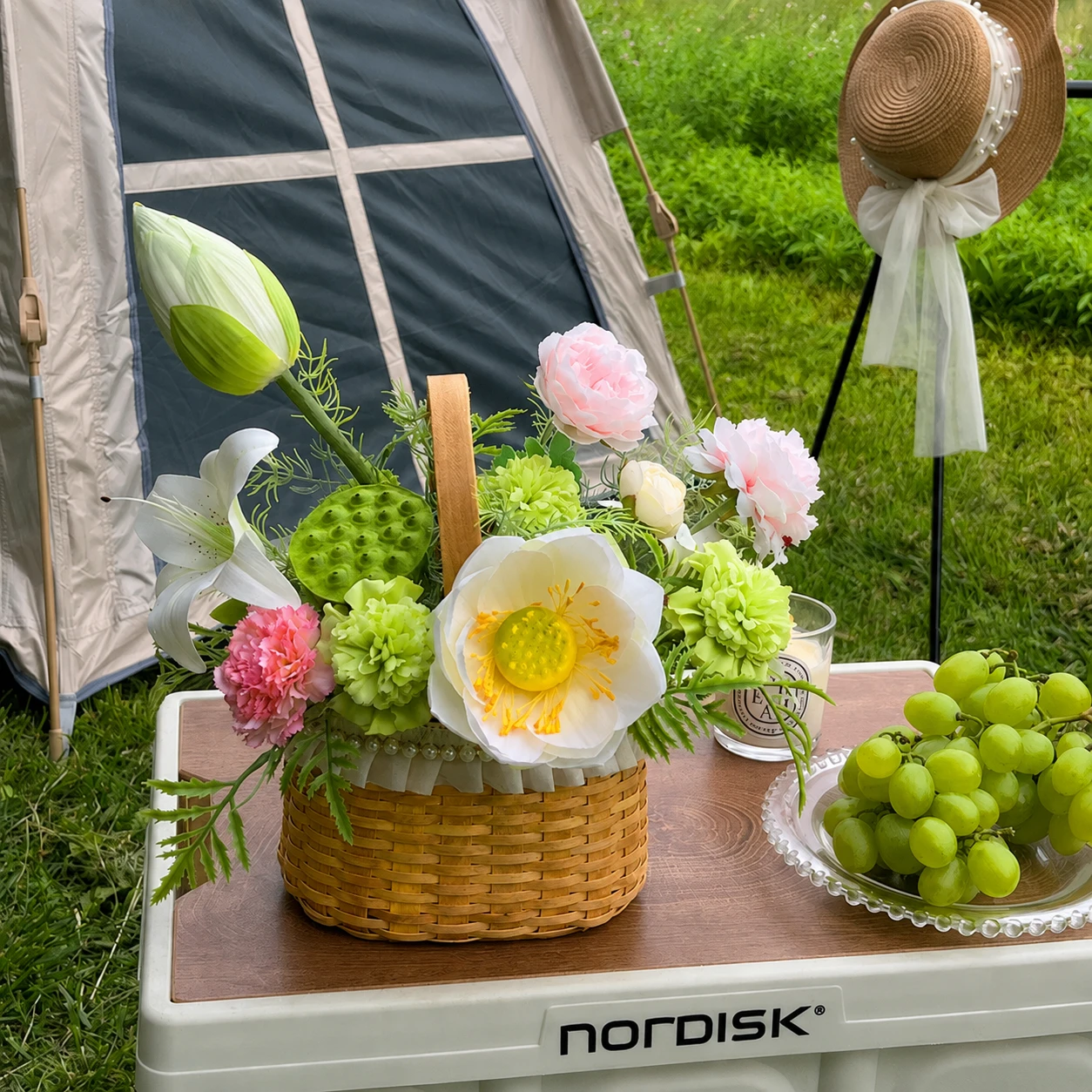

Rain and trapped moisture
Rain does more than wet the visible petals. Water can gather between layered flower heads, around stems or inside a decorative base. Dense arrangements may also take longer to dry than expected.
Construction differs considerably between products, so there is no universal rule that all artificial flowers can be rinsed, left in the rain or placed in a container that holds water. Unless the arrangement is explicitly described as suitable for outdoor conditions, keep it away from exposed rain and standing water.
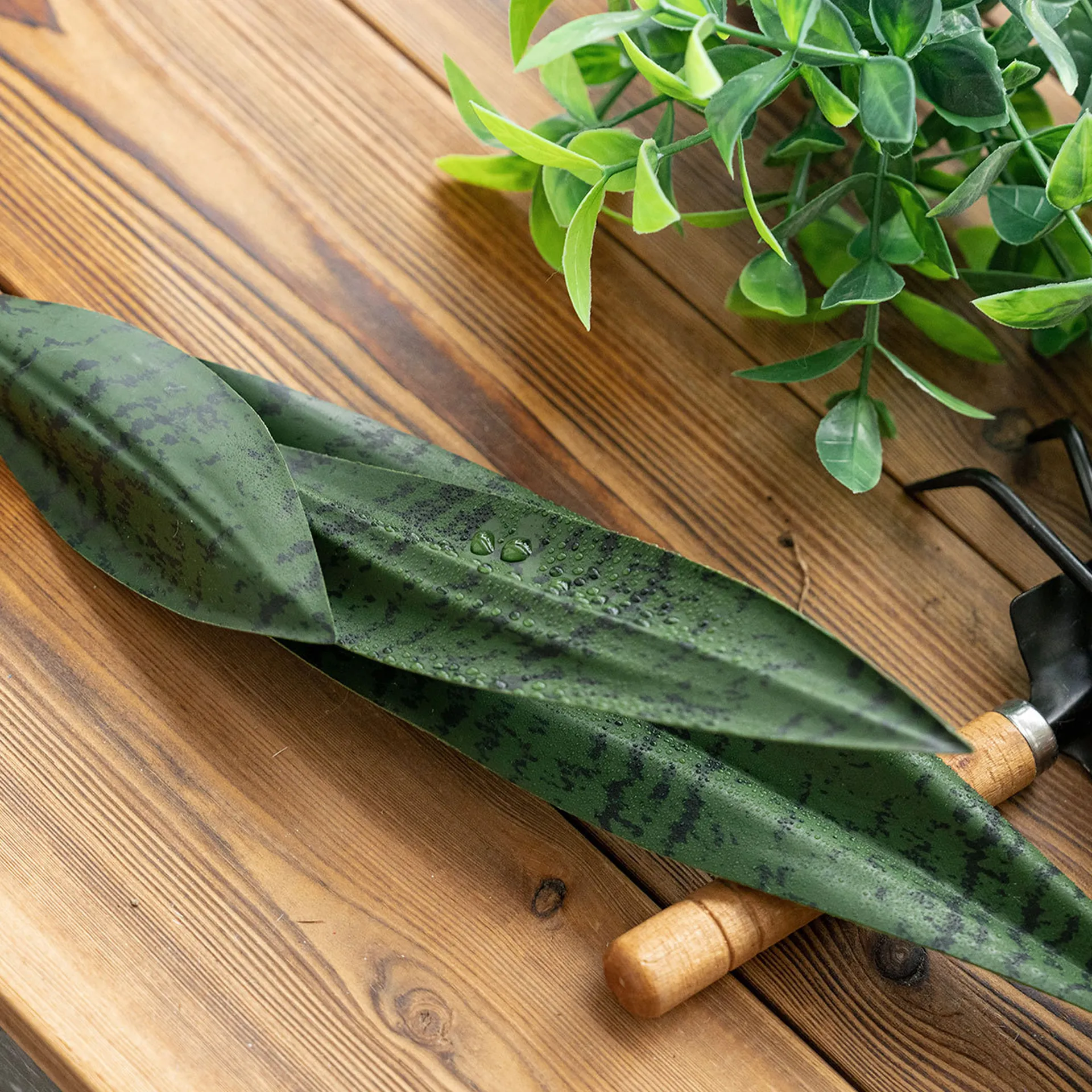
Wind and stability
A light container with a broad or top-heavy arrangement can become unstable outside. Tall stems and wide foliage catch the wind, while loose decorative pieces may shift or detach.
The container should stand securely on a level surface, and the arrangement should not be placed where it could fall onto a path, table setting or seating area. A sheltered position helps, but it does not remove the need for a stable base.
Covered and exposed positions are not equivalent
| Position | Likely exposure | Practical approach |
|---|---|---|
| Covered porch | Indirect light, humidity and occasional wind | May suit a temporary display if the product guidance allows it |
| Sheltered balcony | Changing sunlight, wind and possible wind-driven rain | Inspect regularly and bring the arrangement inside during poor weather |
| Open patio or garden | Direct sun, rain and stronger wind | Use only products explicitly intended for outdoor conditions |
| Outdoor event | Short-term exposure with changing weather | Check the forecast, secure the base and bring the display inside afterwards |
Even under cover, the amount of exposure depends on direction and season. A north-facing porch may remain shaded, while a covered south-facing position can still receive hours of direct summer sun.
What to check before putting artificial flowers outside
Read the product description
Look for clear wording such as “suitable for outdoor use” or an equally specific manufacturer statement. Do not infer outdoor suitability from a photograph showing the product in a garden.
“UV-resistant” and “outdoor-rated” are also not promises that a product will remain unchanged forever. They indicate that the item has been designed or treated for particular conditions, but the exact limitations still depend on the manufacturer’s instructions.
Assess the actual position
Consider more than whether the area has a roof. Check:
- How many hours of direct sunlight reach the arrangement.
- Whether rain can blow into the space.
- Whether the position becomes damp or humid.
- How exposed it is to wind.
- Whether water can drain away from the container.
An arrangement that is protected from overhead rain may still receive strong afternoon sunlight or wind-driven moisture.
Check the base
The container should be stable, suitable for the surface beneath it and unable to trap water around the arrangement. If the display is unusually tall or wide, a heavier base may be safer than a light decorative pot.
Do not add stones, adhesives or permanent fixings without considering the container and the surface where it will stand. A method that works for one arrangement may damage another.
Inspect decorative details
Ribbons, paper-covered elements, untreated natural decorations and loosely attached details may react differently from the main flowers. Outdoor suitability should apply to the complete arrangement, not only to its petals and stems.
How to reduce weather-related wear
The most reliable way to protect artificial flowers outside is to reduce their exposure rather than trying to make an indoor arrangement weatherproof.
- Choose a shaded, sheltered position.
- Use the arrangement outside temporarily rather than leaving it there throughout the season.
- Bring it indoors during rain, strong wind or periods of intense sunlight.
- Inspect the base and flower heads regularly for trapped moisture.
- Rotate the display if one side receives noticeably more light, while remembering that rotation only distributes exposure; it does not prevent fading.
- Avoid applying protective sprays unless the product manufacturer confirms that they are compatible with the flower and its finish.
Outdoor displays also collect dust, pollen and debris more quickly than indoor ones. Our guide to cleaning artificial flowers without damaging them explains why a gentle, dry-first approach is usually safer than soaking an entire arrangement.
Do artificial flowers fade in the sun?
Artificial flowers can fade in sunlight, but there is no single reliable timetable that applies to every product.
Colour, material, manufacturing method, window glass, season and hours of exposure all influence the result. A flower placed in bright shade may change more slowly than one left in direct midday sun, but “slower” does not mean “never”.
UV-resistant products may be a better choice for brighter positions, although their claims and care instructions still need to be checked individually. Avoid treating a general term such as “faux flower” or “artificial flower” as evidence of weather resistance.
The same variables also affect the useful life of an indoor display. For a broader explanation, see how long artificial flowers last.
When indoor placement is the better choice
Keep an artificial arrangement indoors if:
- The product has no outdoor-use information.
- The position receives prolonged direct sunlight.
- The arrangement contains delicate or loosely attached details.
- The container cannot drain or remain stable.
- The display would be difficult to bring inside during poor weather.
- Preserving its current colour and finish matters more than having it outside.
A window, conservatory or glass door can still provide a visual connection with the garden without exposing the arrangement directly to rain and wind. Moving a display temporarily for a meal or event is also less demanding than leaving it outside continuously.
The practical answer
Artificial flowers may be used outside when their specifications and position support it. An explicitly outdoor-rated product in a stable container is different from an indoor arrangement placed on an exposed table.
If the product is not made for outdoor use, choose a covered, shaded position, treat the display as temporary and bring it inside when conditions change. When the specification is unclear, indoor placement is the safer choice.