
Close enough to check
Everything below is a stem you can buy here, photographed in ordinary light. Four things worth looking at, and two more you will only find once it is in your hands — the light through a petal edge, and a stem that bends where you want it to.
-
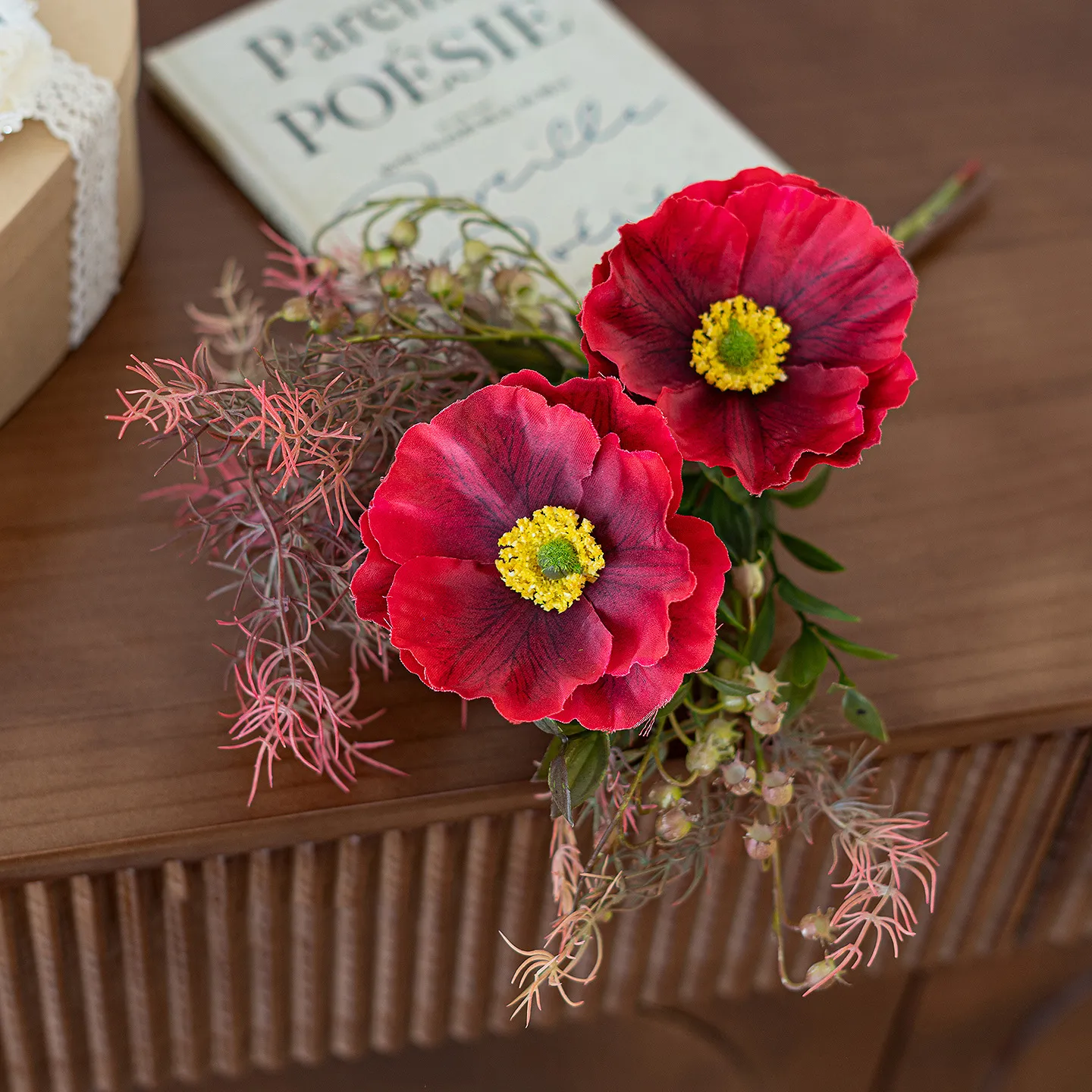
Veining that stops in a different place every time
The dark veining on these petals runs from the centre outward and stops somewhere different on each one. The stamen is a mass of separate granules around a green stigma rather than a moulded yellow disc. That centre is where the eye goes first on a poppy, and it is the first thing a cheap one simplifies.
-
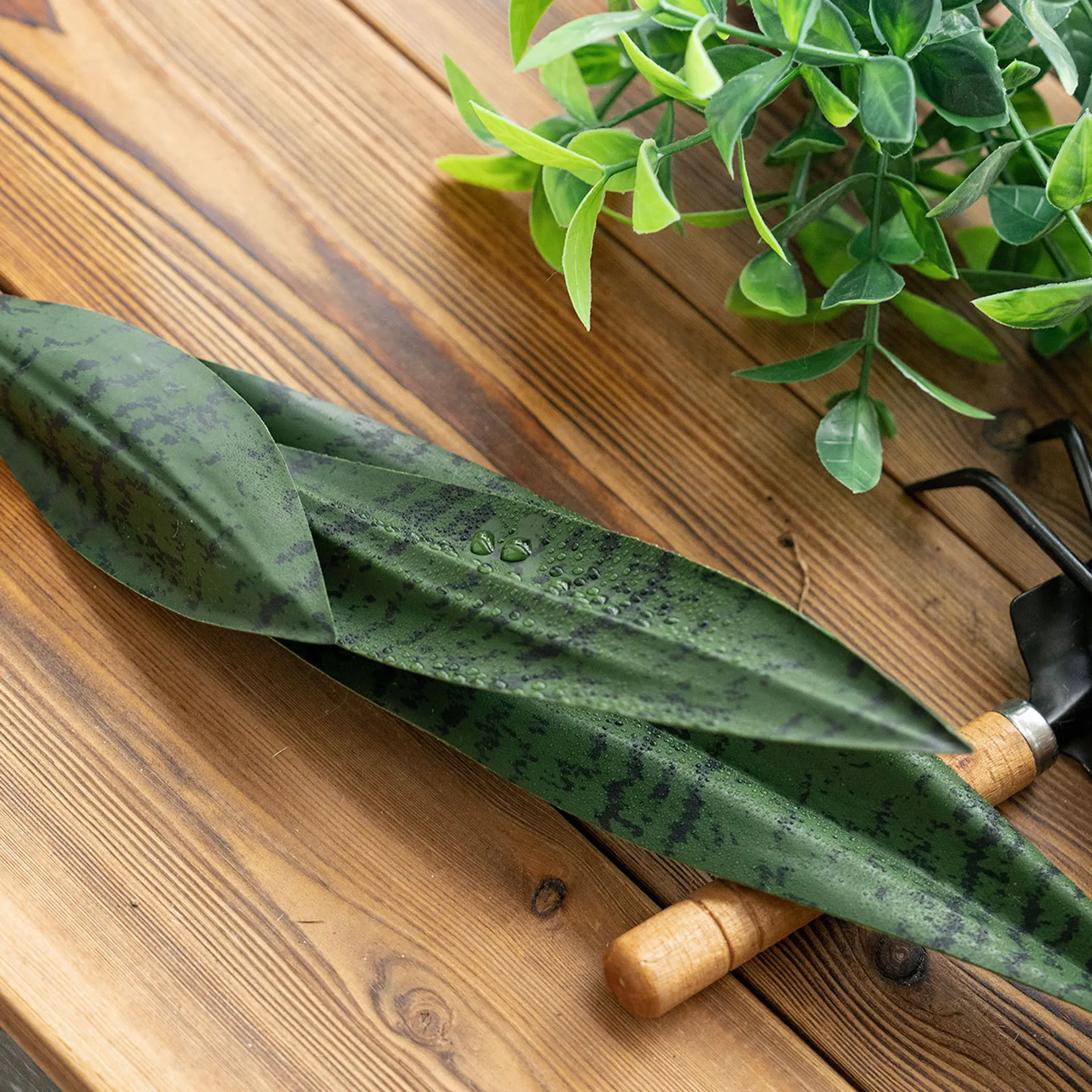
The mottling carries onto the underside
Look at where the pattern goes. It is irregular across the leaf and it continues round onto the back, and a pattern that stops at the edge is a pattern that was printed. The droplets are worth a second look too — they are sitting on the surface rather than soaking into it.
-

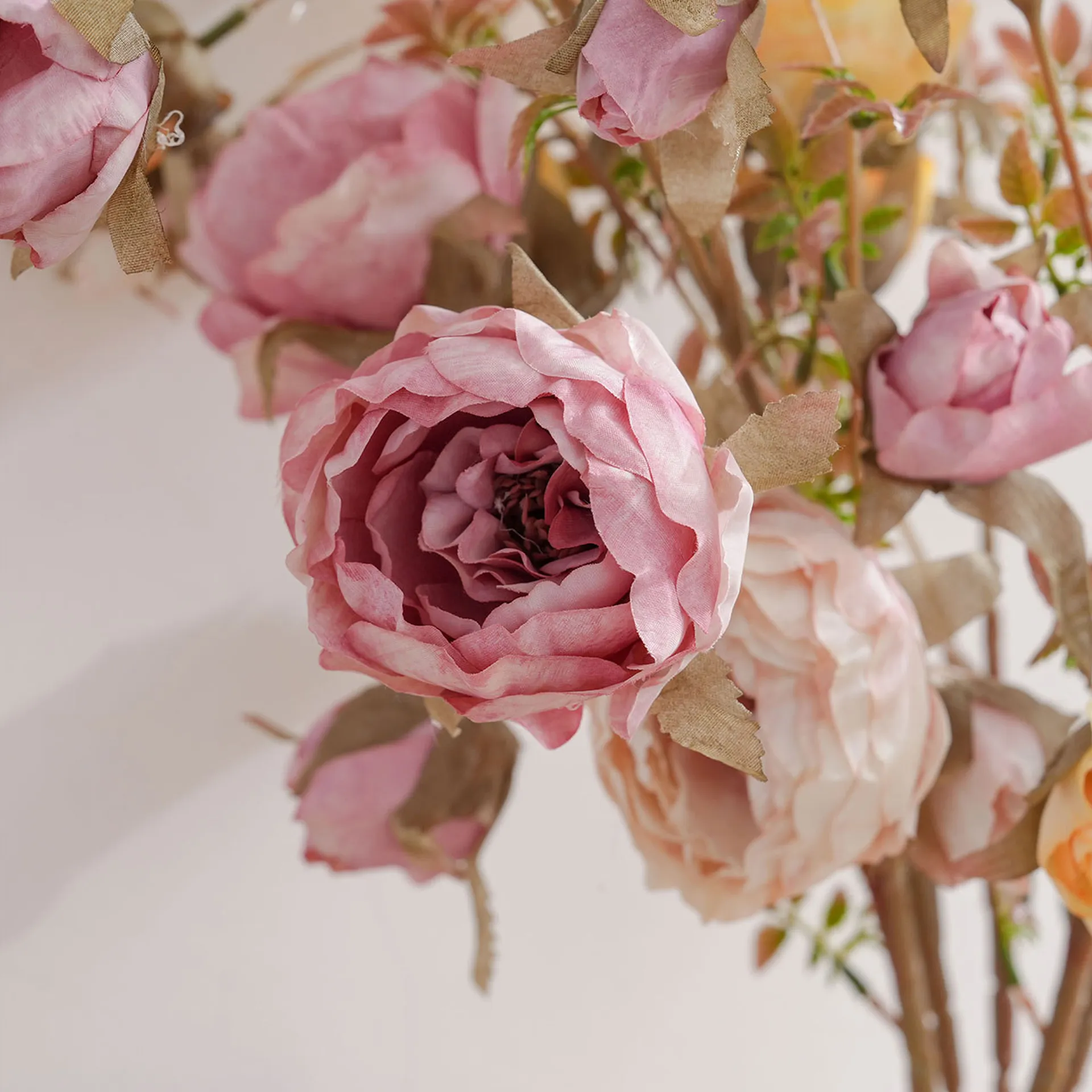
No two heads on the same stem
Count the petals on the open bloom and then look at the buds behind it — different sizes, different degrees of open, and the colour deepening as it goes inward rather than sitting flat across the head. The outer petals curl back and none of them are the same shape. Held up to a lamp, the thinnest outer edge still passes a little light instead of going flat and grey.
-
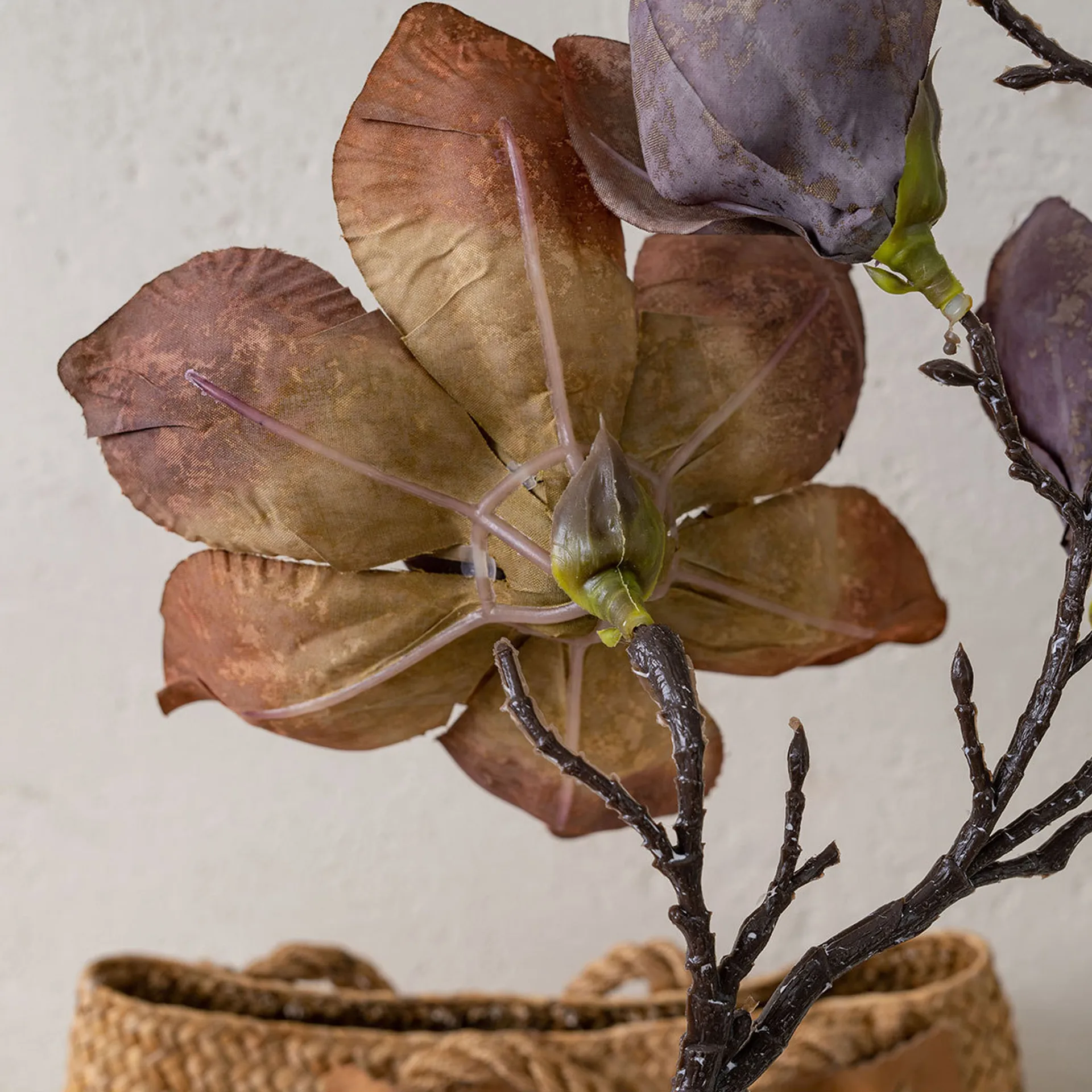
Built to look past its best
This one is deliberately imperfect. The petals are foxed and unevenly faded, the branch is knotted and dark rather than smooth green plastic, and the buds are at different stages. Cheap artificial flowers are always in full bloom and always in perfect condition, because that is easier and it photographs better. Real ones are almost never either.
Four things I check
A design that cannot meet these does not go on the site, however good it looks in a photograph.
A stem that bends and stays bent
Every stem holds the shape you give it, and cuts cleanly with floristry cutters.
A calyx, not a collar
Five sepals and a slight swell where the hip would be, rather than the bloom joined straight to a green plastic ring.
Petals that stay put
Nothing shed on the table by day three, and nothing left behind when a piece is carried from one room to another.
Colour that is not flat
Pigment deepening towards the throat and lightening at the edge. A single even colour across a whole head is where cheap stems give themselves away.
Four tests you can do in a shop
None of these need mine. Run them on anything, anywhere, including on mine.
Hold it up to a lamp
A good petal glows slightly at the rim. A flat printed one goes grey.
Run a thumb across a leaf back
You should feel the veins before you see them. Drawn-on veining is smooth.
Look at three blooms on one stem
If they are the same size at the same angle, one mould made all of them.
Bend the stem and let go
It should hold the new shape. Springing back means no wire, and no use.
The rest of it — what to look for in each kind of flower, and which ones are still genuinely difficult to copy — is set out by flower type.